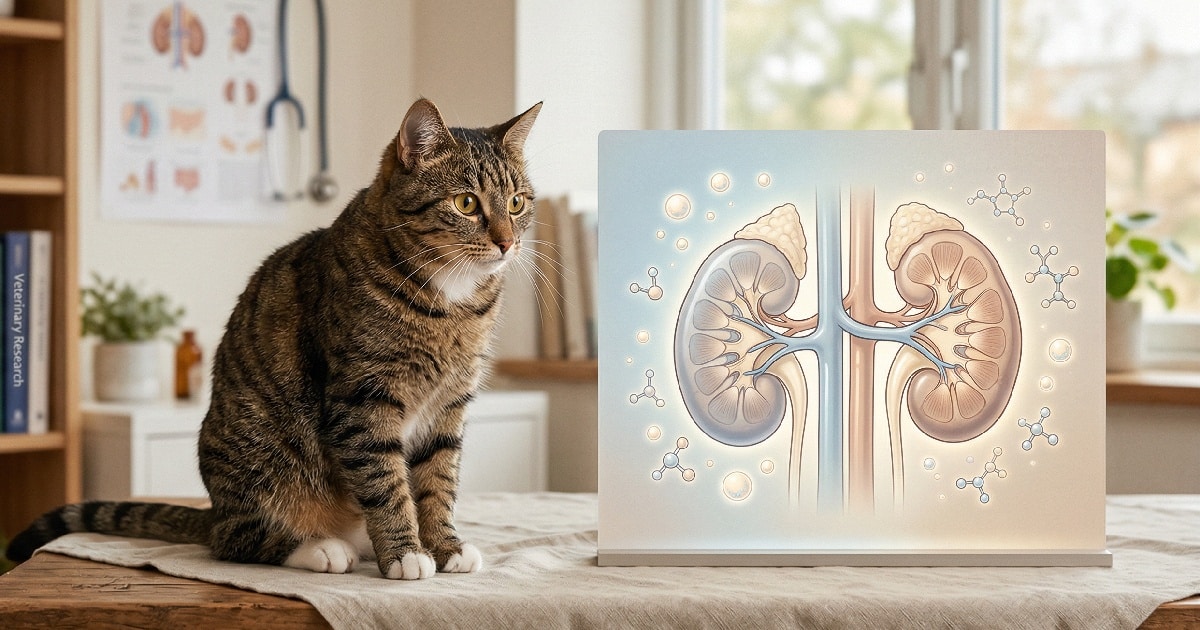
Few diagnoses worry cat owners more than kidney disease. Chronic kidney disease, or CKD, ranks among the most common conditions affecting cats, yet veterinarians have puzzled for years over why the species is so susceptible to it.
A new study out of the University of Nottingham may have uncovered an important clue. The research team discovered that domestic cats appear to accumulate unusual fat types within their kidney cells—fats rarely seen in other mammals—and they suspect this could tie into cats’ elevated rates of kidney disease.
Published in Frontiers in Veterinary Science, the study underscores just how differently cat physiology operates compared to other mammals.
An Odd Discovery Inside Cat Kidney Cells
To dig into the mystery, the team ran in-depth chemical analyses on kidney tissue samples, and what they found surprised them: domestic cats were accumulating unusual varieties of triglycerides, the type of fat the body typically relies on to store energy from food.
Triglycerides tend to follow a fairly consistent chemical structure across nearly all animal species. In cats, however, many of these fat molecules showed unusual bonds or branching structures rarely observed in other mammals.
A number of these triglycerides also contained ether bonds—distinctive chemical linkages that behave differently than the fats typically found in food. Since these bonds function differently at the cellular level, they may alter how fat gets processed or stored within kidney tissue.
The Pattern Didn’t Show Up in Dogs or Wild Cats
One of the study’s more compelling moments came from comparing cats against other species. Dogs showed no trace of the unusual fat accumulation found in domestic cats, and even wild cats—close relatives of house cats—rarely displayed the same pattern.
Samples from Scottish Wildcats showed the unusual fats only intermittently. That gap points to something specific about domestic cats, or their internal biology, that makes them more prone to building up these lipids.
The researchers also detected traces of these fats in young cats’ kidneys, hinting that the underlying process may begin well before any signs of kidney disease appear.
How This Fat Buildup Could Damage Kidney Health
The research team believes this accumulation of unusual lipids in kidney cells may signal ongoing, long-term cellular stress.
Over time, that stress could gradually damage kidney tissue and potentially play a role in the onset of chronic kidney disease.
CKD typically progresses gradually, and many cats show few if any early symptoms, meaning the disease often isn’t caught until kidney function has already deteriorated. This is exactly why researchers are so focused on biological shifts that might begin years before any symptoms surface—understanding these early changes could eventually lead to new ways of safeguarding cats’ kidney health.
What These Findings Could Mean Going Forward
While the research opens up plenty of new questions, it also points toward some potential answers.
The team hopes that pinpointing why these fats accumulate could eventually lead to dietary strategies designed to reduce the buildup—whether through specialized foods or supplements aimed at improving fat metabolism in cats. Success on that front could pave the way toward better prevention methods, earlier diagnostic testing, and new treatments to keep cats from developing kidney disease in the first place.
These results also reinforce something veterinarians have long recognized: cats are biologically unique. As obligate carnivores, their bodies process nutrients differently from many other species, which could influence how fats and other compounds behave within their organs.
For cat owners, the takeaway is that routine vet checkups, early screening, and a balanced diet all matter for preserving kidney health over the long run. As researchers keep exploring feline biology, discoveries like this one could pave the way toward better protection against one of the most common illnesses cats face as they age.
Study Credit
This piece draws on research carried out by a team at the University of Nottingham.
Study: Brociek, R. A., et al. “Lipid droplets in felid kidneys: prevalence and composition by lipidomics.” Frontiers in Veterinary Science (2026). DOI: 10.3389/fvets.2026.1711591.