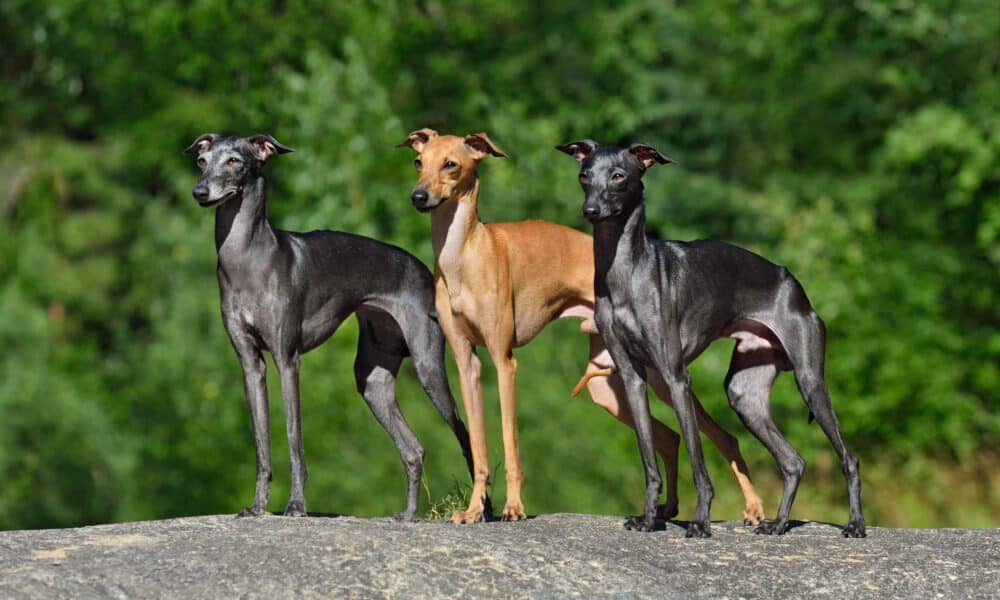
With a long and captivating history behind them, Greyhounds are dignified yet mild-mannered dogs that enjoy a fast chase just as much as a long nap.
Best recognized for their long, slim legs and striking build, their taut, visible muscles help make them the quickest dog breed on the planet.
History
The Greyhound boasts an unusually rich past. Throughout the age of ancient civilizations, the breed captured the imagination of artists, poets, and rulers alike.
It ranks among the oldest dog breeds in existence, and every sighthound alive today traces its lineage back to these ancient greyhounds.
Images resembling them show up in tomb art dating back to ancient Egypt, and they also appear throughout Celtic, Irish, and British history and literature as far back as the 9th century.
In ancient times they served as sight hunters across North Africa and the Middle East, and records also connect them to Ancient Greece.
Greyhounds were originally reserved for the elite, living alongside nobles and royal families.
England even passed a law in 1016 making the killing of a Greyhound punishable by death, reflecting just how prized the breed was—ownership was limited to the wealthy and royalty.
Because the breed is so ancient, no one knows for certain where the name “Greyhound” originated. Some trace it to the words Graius or Grecian, while others believe it stems from the Old British terms “grech” or “greg,” meaning dog, combined with “hundr,” meaning hunting.
Another theory suggests the name simply comes from their gray coloring in the original breed, giving us “gray hound.”
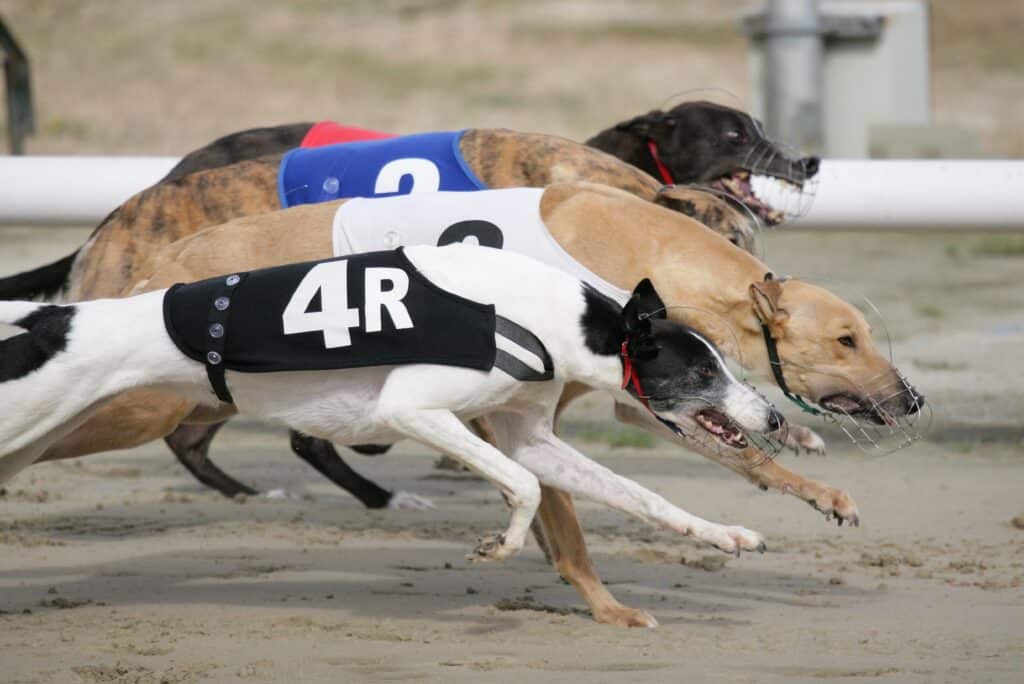
Greyhounds fall under the hound group, but unlike most other hounds, they hunt by sight rather than scent—a method referred to as “coursing.”
They were bred for the speed and agility needed to pursue hares, deer, foxes, and other small game, and they hold the title of fastest dog breed alive, capable of hitting speeds near 72km/h.
That same speed is why Greyhounds were also bred for racing, coursing competitions, and eventually track racing.
In more recent times, the harsh realities of breeding and training dogs for these gambling-based competitions have come to light, prompting new laws to protect them.
Numerous racing dogs faced abuse, abandonment, or even death once they stopped being useful to their handlers. A number of organizations now run active rescue programs to pull these dogs out of such conditions.
Today’s Greyhounds make dignified, wonderful family pets known for being gentle, smart, and free of aggression.
Physical Characteristics
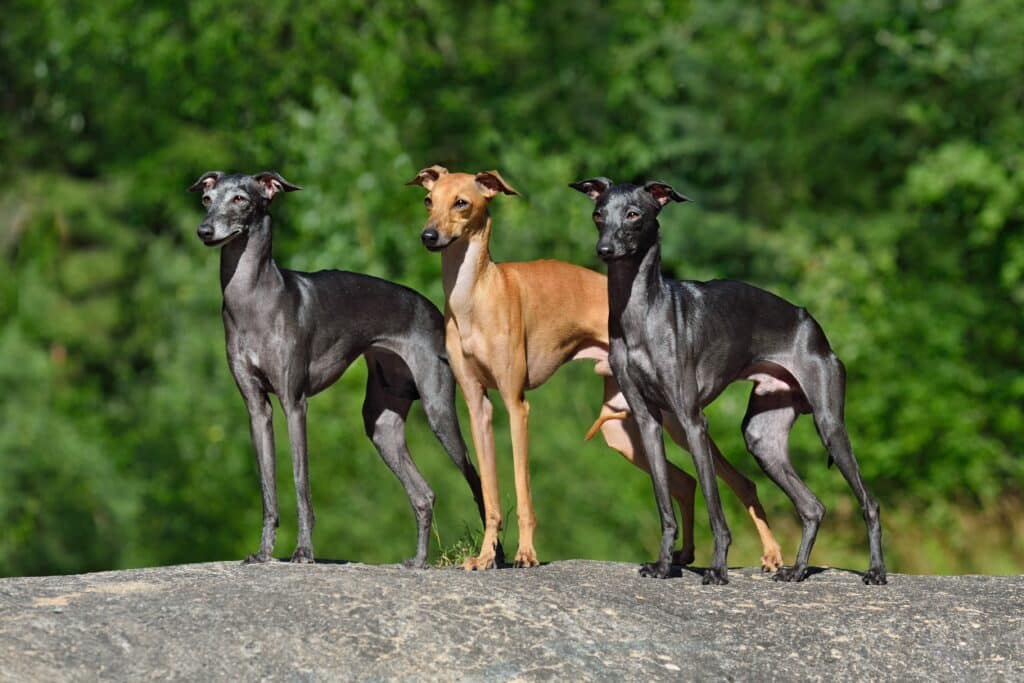
Everything about a Greyhound’s build is engineered for speed—a lean, muscular frame, a narrow head, a long neck, wide nostrils for easier breathing, a deep chest that supports strong stamina, a long slender tail, and powerful legs made for sprinting.
These traits don’t just make them fast—they also give the breed its striking “inverted S” silhouette, a shape people have admired for thousands of years.
Their coat is short, smooth, and low-maintenance, which also makes them well suited to warmer climates.
They carry almost no body fat and have notably delicate skin. Though best known for their gray coats, Greyhounds actually come in several other colors too, including white, fawn, red, brown, and brindle.
Their ears fold back while running or racing but stand upright when they’re alert or excited.
Dark eyes and somewhat cat-like feet round out a build well suited for racing and general running activity.
In the standard breed, Greyhounds typically stand 26 to 30 inches tall and weigh between 60 and 90 pounds.
Temperament

Greyhounds have a calm, mild-mannered temperament and make excellent family pets. That said, since they’re sensitive and easily startled by loud noises, they do best in quieter, low-key households.
Having been bred to hunt alongside other dogs, they’ve largely lost any tendency toward aggression with other canines.
That same gentle nature makes them generally patient with children—they’re more likely to simply walk away than snap or growl when annoyed.
On the other hand, Greyhounds have a strong prey drive, so housing them with small pets like cats or rabbits usually doesn’t work out well, since the dog may view them as something to chase.
Despite loving a good run and being a naturally athletic breed, Greyhounds are also happy to laze around the house and nap for hours at a stretch.
Training And Exercise
Because they’re intelligent and easygoing, training a Greyhound tends to be somewhat simpler than with many other breeds.
Their sensitivity does mean training should rely on positive reinforcement, and a food reward is a reliable way to keep their attention during sessions.
Exercise-wise, two 30-minute walks daily are usually enough, provided they also have room to run and burn off energy in a spacious yard.
It’s wise to always keep them leashed on outdoor walks, since their strong prey drive means spotting a squirrel or bird in the park can trigger an immediate chase.
Health Issues
The deep chest that gives Greyhounds their strong endurance also leaves them more prone to bloat, a condition where the stomach fills with air and twists on itself—a potentially fatal issue if not treated quickly.
Greyhounds are also uniquely sensitive to anesthesia—they’re the only breed known to react strongly to certain anesthetic drugs like thiopental. Doses considered perfectly safe for other dogs can actually be lethal to a Greyhound.