Going all the way back to the 1920s and 1930s, the smart and mild-mannered Collie has been a familiar face in American households for generations.
This graceful breed has also earned a lasting spot in popular culture, showing up again and again in books, television, magazines, and film.
Background
Collies are thought to have first arrived in Britain alongside the Romans around 500 BC. At that point, they weren’t recognized as a distinct breed of their own.
That changed in the 1700s, when they began to be purpose-bred for herding and guarding livestock across Scotland and northern England.
These dogs worked out in the Scottish countryside through harsh winters, and their sharp intelligence meant they could respond quickly to commands and even solve problems independently.
Originally, these dogs were bred purely for function, not for looks. That began to shift when Queen Victoria visited Scotland in the 1860s and took notice of them beyond their farm duties, bringing them into the spotlight for their appearance and grace.
She was taken with the breed’s natural appeal, and over the following decades, Collies gradually shifted from working animals into a breed valued primarily for being an attractive companion.
The name “Collie” is thought to trace back to the Scottish black-faced sheep known as Coleys that the breed was tasked with herding and watching over — though it may also come from the Scots word for “coal.”
Even now, thanks to their sharp minds and deep-rooted herding instincts, Collies still work as herding dogs in some settings. But they’ve also become widely loved as family pets.
Their frequent appearances in film, television, and literature have only added to their popularity.
What They Look Like
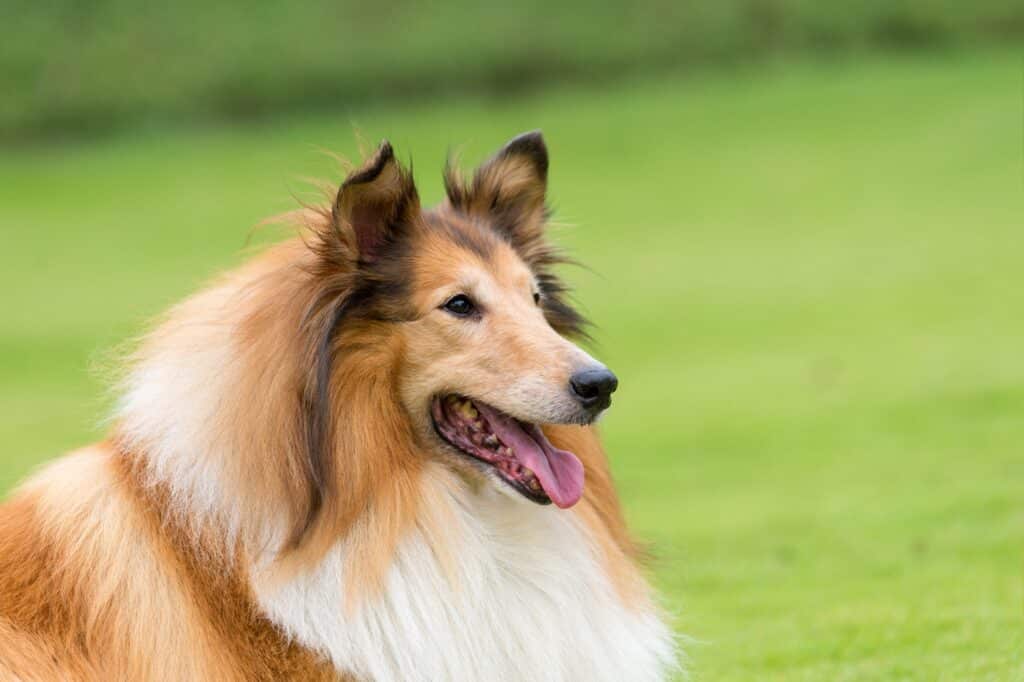
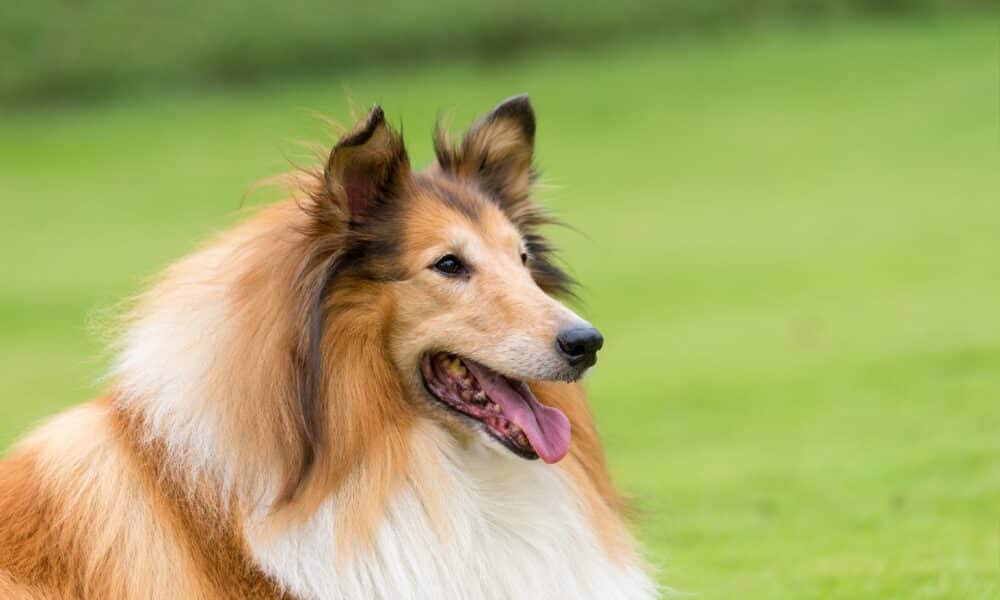
Collies fall into the medium-to-large category, generally standing 22 to 26 inches tall and weighing between 45 and 75 pounds.
The breed comes in four recognized color combinations:
- Tri-color: black with white markings and tan accents
- Sable and White: ranging from pale gold to deep mahogany
- Blue Merle: mixes of black and blue, or gray with tan accents
- White: mostly white with some color markings
There are also two coat varieties within the breed:
- Rough-coated (long-haired)
- Smooth-coated (short-haired)
Don’t be fooled by appearances — every physical trait of a Collie actually plays into its herding ability. Being a fairly large dog gives it the presence to confidently lead an entire herd.
That thick, ruffed coat isn’t just for looks either — it works to its advantage if another animal tries to nip at it, since the attacker ends up with a mouthful of fur instead. The dense, rough coat also helps Collies handle the often harsh weather found across the British Isles and Europe.
That said, smooth-coated Collies tend to be the preferred choice for actual herding work, since they can move more freely without the bulk of a heavy coat or the risk of overheating during long stretches of steady activity.
Because of that, rough-coated Collies aren’t really needed on working farms anymore, and have instead settled comfortably into life as beloved household pets.
Even with all that thick fur, rough-coated Collies handle a wide range of weather just fine, whether it’s hot and sunny or cold and damp. Trimming their coat isn’t necessary, and doing so can actually leave them uncomfortable.
Personality
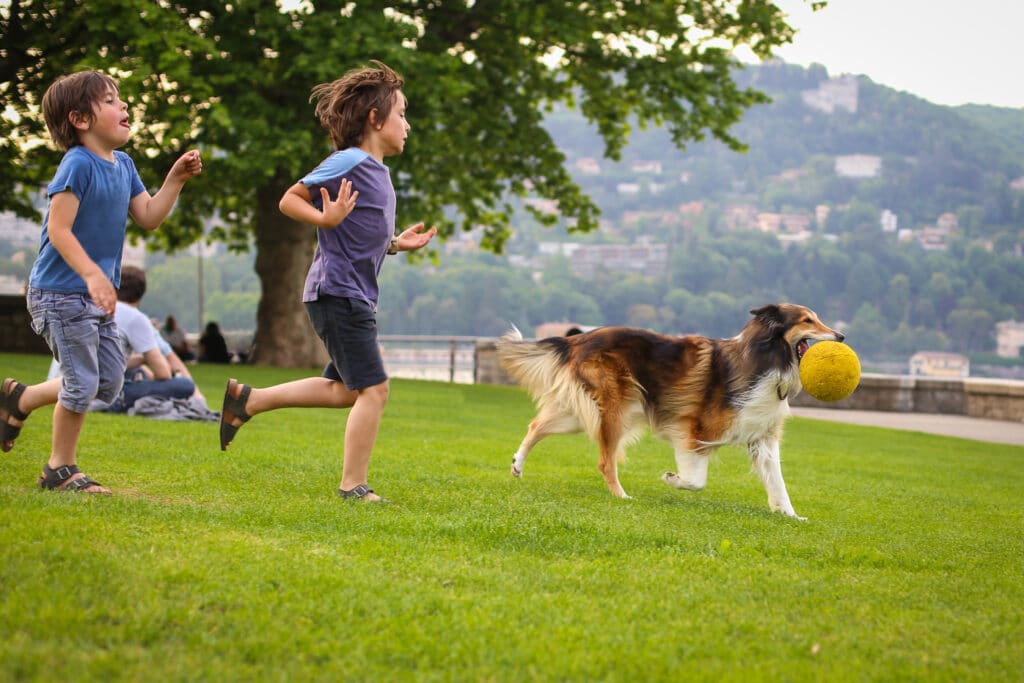
Collies are known for being sharp-minded and hardworking. As a herding breed, they carry a natural drive to herd things.
But there’s more to them than just work ethic and herding talent.
Collies are also warm, friendly, and gentle by nature — which is exactly why so many families choose them as companions.
They genuinely enjoy being part of a household and have a soft spot for kids, partly because they’re playful themselves. They love joining in on play with children, while also stepping in to look out for them when it matters.
On top of that, they’re deeply loyal to their owners, fairly athletic, and many tend to be somewhat vocal.
Training and Exercise Needs
Because Collies are intelligent and eager to please, training them is generally an enjoyable process. That said, they can be somewhat sensitive, so a gentler, more encouraging approach tends to work better than force.
Positive reinforcement goes a long way in rewarding their intelligence and effort.
Harsh or heavy-handed training methods don’t sit well with Collies, and they’ll eventually tune you out if you rely on that approach.
Given their herding background, it’s no surprise Collies need more physical activity than many other breeds. Aim for at least one to two hours of exercise daily, whether that’s walking, jogging, or active play.
They’re a genuinely active breed, so having yard space where they can move around freely is a real bonus for both their physical and mental wellbeing.
It’s also worth giving them opportunities to actually use their herding instincts. Mental engagement matters just as much as physical activity.
Without enough exercise, Collies can start developing problem behaviors, like excessive barking.
Health Concerns
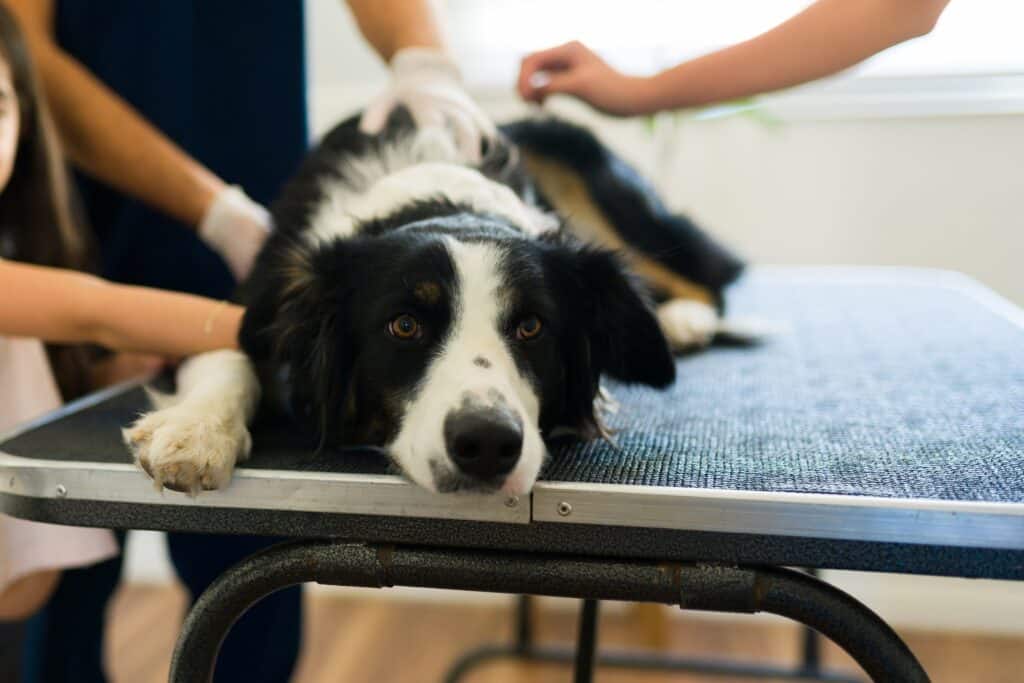
Collies are typically a healthy breed overall, though they can be prone to a handful of specific conditions, including:
- Collie Eye Anomaly: An inherited eye condition some Collies are born with, affecting deeper structures of the eye and potentially leading to blindness before the dog even turns two.
- Progressive retinal atrophy (PRA): A category of eye diseases where the retina deteriorates over time, which can eventually cause blindness.
- MDR1 (Multi-Drug Resistance) gene mutation: While any dog could potentially carry this mutation, it shows up more often in Collies. It makes affected dogs more sensitive to certain medications, so vets typically need to adjust dosages or avoid specific drugs altogether when treating them.