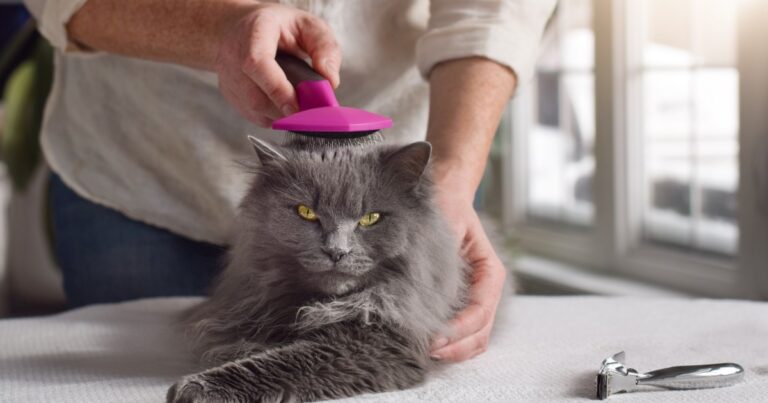
Cats win over pet owners everywhere with their charming quirks, comforting purrs, and independent nature. Still, despite all the happiness they add to our lives, there’s one part of living with a feline that tests the patience of even the most dedicated cat owner: the never-ending trail of cat fur.
As though governed by some strange law of physics, cat fur seems to find its way into every corner of the house, sticking to fabric, coating furniture, and rolling across floors in fluffy little clumps.
Don’t worry, though — this guide dives into everything about cat fur, and more importantly, how to tackle it. Whether you’ve been a cat owner for years or you’re just getting used to life with whiskers and paws, let’s explore how to live comfortably and cleanly alongside the fur.
Furniture
Nobody enjoys sitting on a fur-covered couch or chair. The best way to cut down on buildup is to discourage your cat from climbing onto the furniture in the first place. If you’ve just brought home a kitten or a new cat, this is the ideal moment to establish that boundary.
Provide your cat with a cozy bed or dedicated cat furniture and designate that as their resting spot. If your pet has already claimed a couch or chair as their own, consider applying a fabric protector to it. This typically makes vacuuming the fur off the surface easier and keeps it from working deeper into the material.
Vacuuming is generally the most effective method for removing hair from upholstered pieces. For wooden furniture, switch to a brush attachment. A magnetic dusting wand can also grab and hold onto loose fur. Running an air purifier helps as well, pulling pet hair and other particles out of the air.
When nothing else works, slipcovers or other protective fabric coverings can shield your furniture. Their benefit is that they can be taken off and laundered regularly to stay clean. Just don’t wash them together with your regular laundry, or your clothes will end up covered in fur too. Toss in two dryer sheets while drying to help push the fur toward the lint trap.
For fabric-covered furniture, adhesive “sticky sheets” are quite effective. These oversized sheets have a mild adhesive coating that lifts fur nicely off car seats, mattresses, and furniture.
When fur builds up inside your phone, laptop, television, or other electronics, a can of compressed air can help. It comes with a narrow nozzle that blasts air into tight spots, loosening trapped fur so you can then sweep it away or vacuum it up.
Carpets
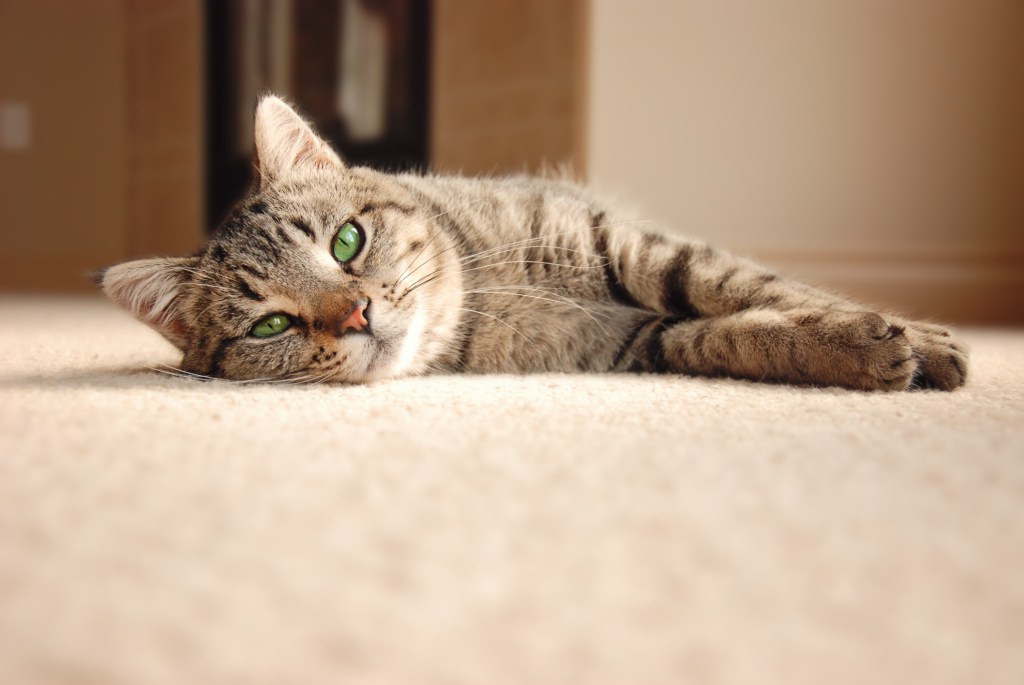
Consistent vacuuming takes care of most fur on carpeting. Finer strands of hair, though, tend to resist even repeated vacuum passes. One helpful trick is dampening a terry cloth towel and wiping it across the carpet. This gathers loose fur into a small clump that’s easy to pick up by hand, and it’s particularly useful in spots where your cat likes to nap and leaves behind a heavy coating of fur.
For carpets that are heavily soiled, a steam cleaner will lift out a good deal of the embedded dirt and fur. Stain-repellent carpet treatments are also available, which protect the surface and make future fur easier to vacuum once it’s clean. A carpet rake is another useful tool — it’s built specifically to fluff up carpet fibers and rake loose fur to the surface.
Clothing
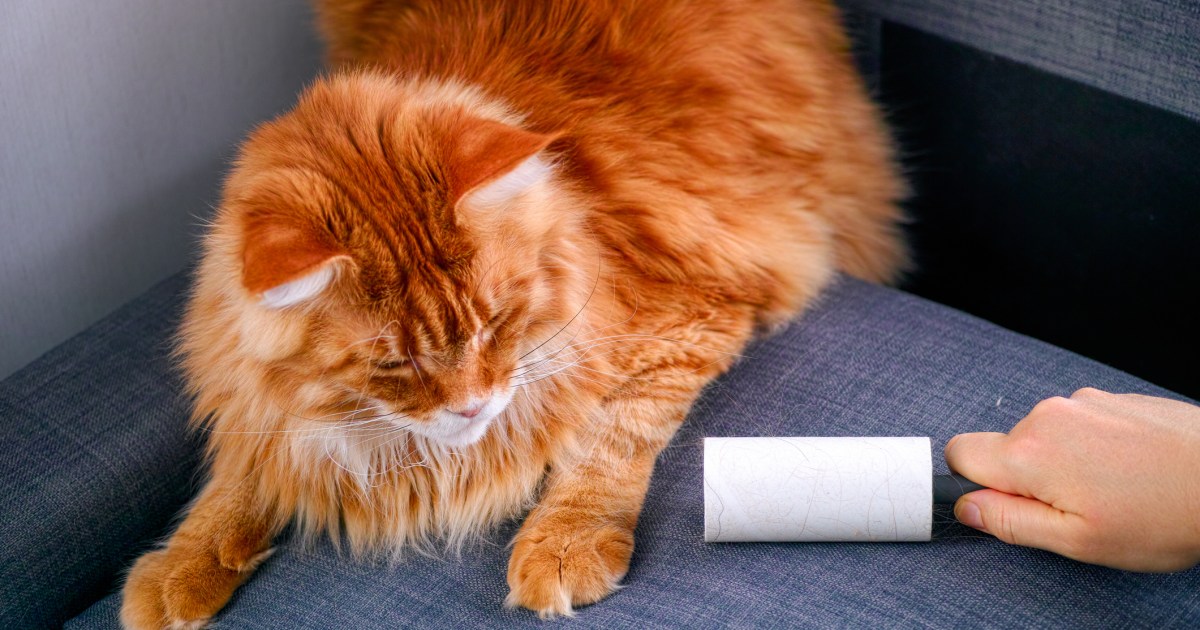
Fur clings stubbornly to clothing, but there are ways to keep your wardrobe fur-free. Pet hair rollers — essentially a rotating tube wrapped in adhesive tape — work well here. Roll it over your clothes and the fur transfers right onto the tape. Once a layer is full, peel it away to reveal a clean layer beneath. These rollers also work on furniture.
Lint brushes and similar fur-removal tools serve much the same purpose. They’re fitted with a special fabric that traps hair, then releases it when you brush in the reverse direction, making cleanup simple.
Anti-static fabric sprays applied to clothing also help repel fur. A dryer sheet can be wiped across clothing as a quick fur-removal trick too. Storing clothes inside plastic dry-cleaning bags in your closet also prevents fur from settling on them.
The car
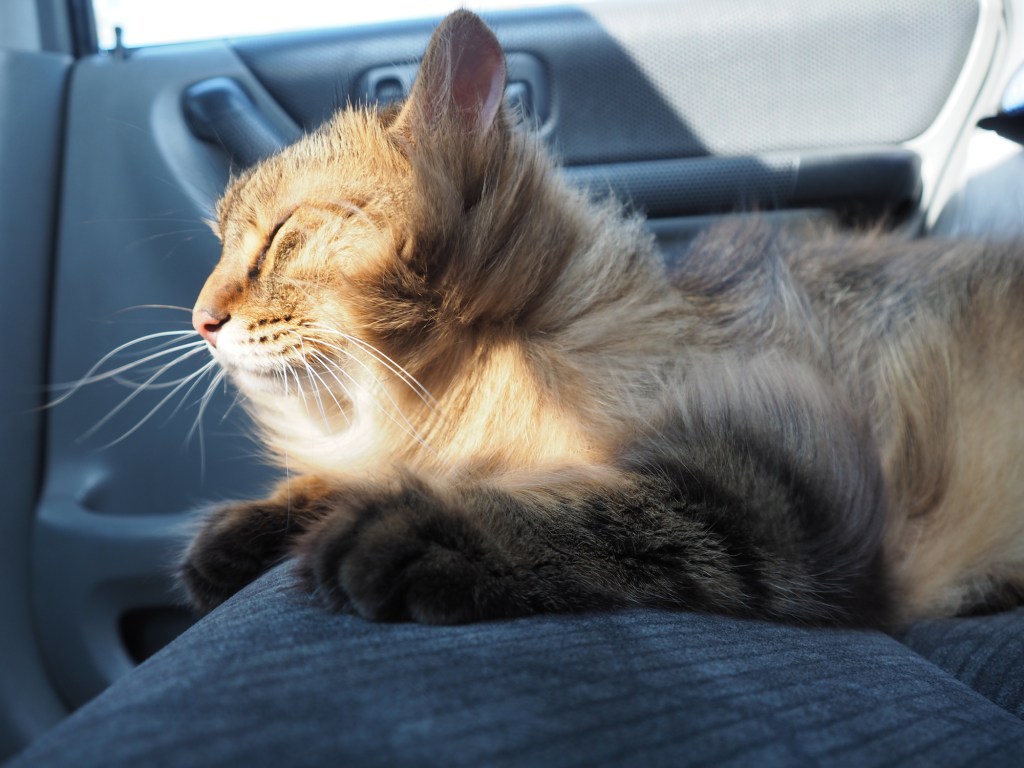
Cloth car seats tend to trap fur more than other surfaces. Covering the seat with a towel or sheet is the simplest way to keep fur from working into the upholstery. Whenever you can, transport your cat in a carrier during car rides — it’s the safer option and it keeps fur out of the vehicle altogether. A handheld car vacuum reaches into crevices well, and wiping down cloth interiors with a damp towel or a fur roller also helps.
Cats that shed less
If shedding remains a persistent issue, you might look into breeds known for shedding less, or hairless breeds like the Sphynx.