It’s a product suggested constantly, but does spraying something bitter onto your belongings actually stop a puppy from chewing?
If you’ve landed here, chances are you’ve just brought home a new puppy (congratulations!) and you’re wondering whether a bitter spray can solve your chewing problem. Good news — you’re in the right place.
As someone who trains dogs professionally, I hear the same frustration constantly: “He chews absolutely everything! I even tried the anti-chew spray and it still didn’t work.”
Personally, I never suggest these sprays to the puppy owners I work with, and most other professional trainers feel the same way.
So what’s the reasoning behind that? Let’s walk through why these sprays fall short, and what actually works instead.
How These Sprays Are Supposed to Work
Bitter sprays get applied to whatever your puppy seems drawn to chew — furniture legs, a couch cushion, whatever. The idea is that once your puppy tastes the unpleasant flavor, they won’t want to bite down on it again, which in theory keeps them away from anything coated in the spray.
In practice, though, this approach falls apart for several reasons.
(A note: if you decide to try a bitter apple spray anyway, avoid formulas containing essential oils like tea tree oil, and skip anything with alcohol or propylene glycol, so you don’t accidentally expose your dog to something toxic. If you want to go the DIY route, something simple like lemon juice is a safer natural option.)
Five Reasons Professional Trainers Avoid Anti-Chew Sprays
1 – They Teach the Wrong Lesson
All a bitter spray really communicates is “this particular taste is unpleasant” — not “here’s what you’re allowed to chew instead.” Coat your table legs in the stuff and your puppy may avoid that exact spot, but they haven’t actually learned that table legs in general are off-limits. The moment you stop reapplying the spray, the chewing often picks right back up.
It’s also worth remembering that puppies have a genuine biological drive to chew, especially while teething — which is exactly why the chew-toy market is so enormous.

2 – It Rarely Works
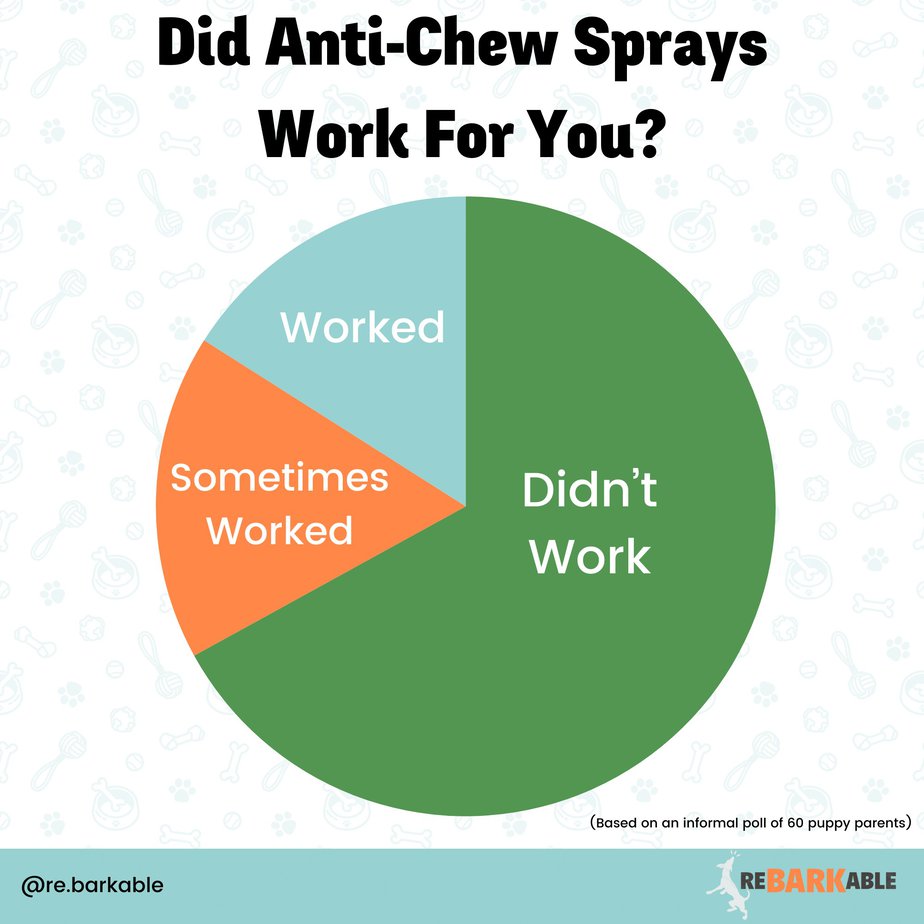
Whether your dog simply licks the bitter spray right off (yes, this happens) or just keeps chewing through the taste anyway, a large share of dog owners — roughly two-thirds by some estimates — report that anti-chew sprays simply don’t work for them. Some dogs actually seem to enjoy the bitter flavor, which can backfire and encourage more chewing rather than less. And plenty of dogs are simply indifferent to the taste altogether.
3 – It’s Technically a Form of Punishment
In the language of operant conditioning, bitter sprays and chew deterrents actually count as positive punishment — introducing an unpleasant sensation to discourage a behavior, in this case creating a negative association with certain objects. It might sound like a reasonable way to get the message across, but it’s far less effective than it seems.
Professional trainers have understood for a long time now that punishment isn’t a necessary part of training a dog.
4 – Puppies Learn About the World Through Their Mouths
Mouthing objects is actually an important part of how puppies explore and socialize with their environment. Turning that instinct into something punishing is a bit like walking through a clothing store where random items are randomly electrified.
Sure, you’re technically allowed to browse — but you’d probably start worrying that touching your favorite sweater might get you shocked. It’s an extreme comparison, but it captures the underlying issue.
5 – Your Puppy Can Simply Move to a Different Spot
Unless you treat every single surface with a comparable texture, results tend to be inconsistent. Owners often overlook a spot their puppy finds appealing, so the puppy just shifts to some untreated corner you never thought to spray in the first place.
What to Do Instead
So if bitter sprays are off the table, what should you actually do?
Step 1 – Control Access
The first move in curbing destructive chewing is limiting what your puppy can actually reach. Start by puppy-proofing your space — clear away shoes, kids’ toys, and personal items that might tempt them. Loose wires and power cords need to be tucked out of reach too, since those are prime chew targets.
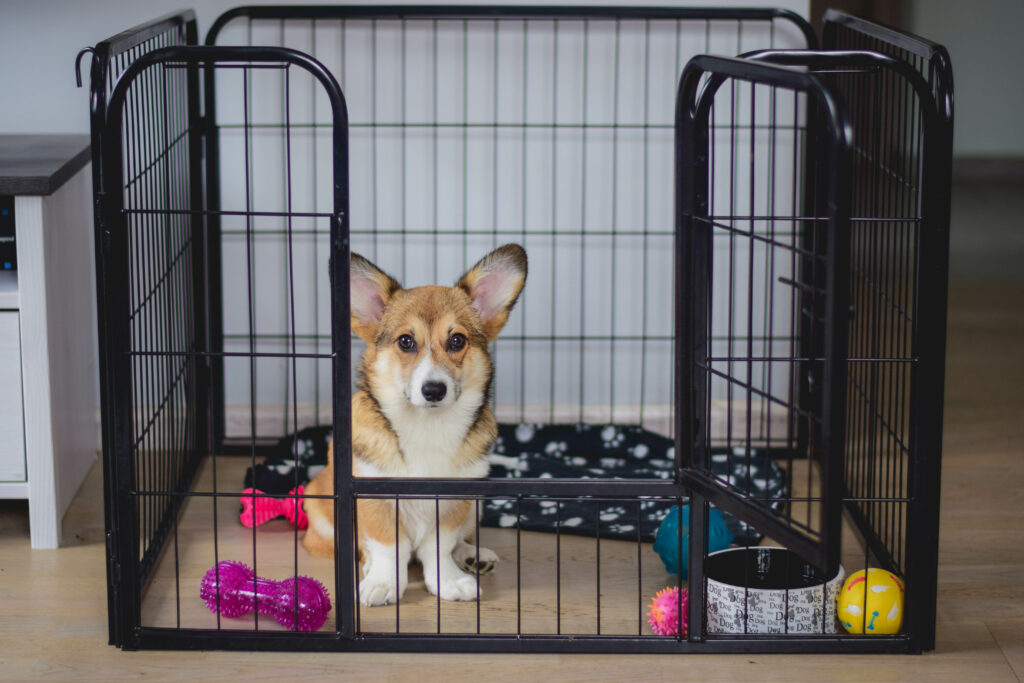
Setting up a designated puppy-safe area, such as a playpen or crate, gives your puppy somewhere to explore freely without getting into trouble.
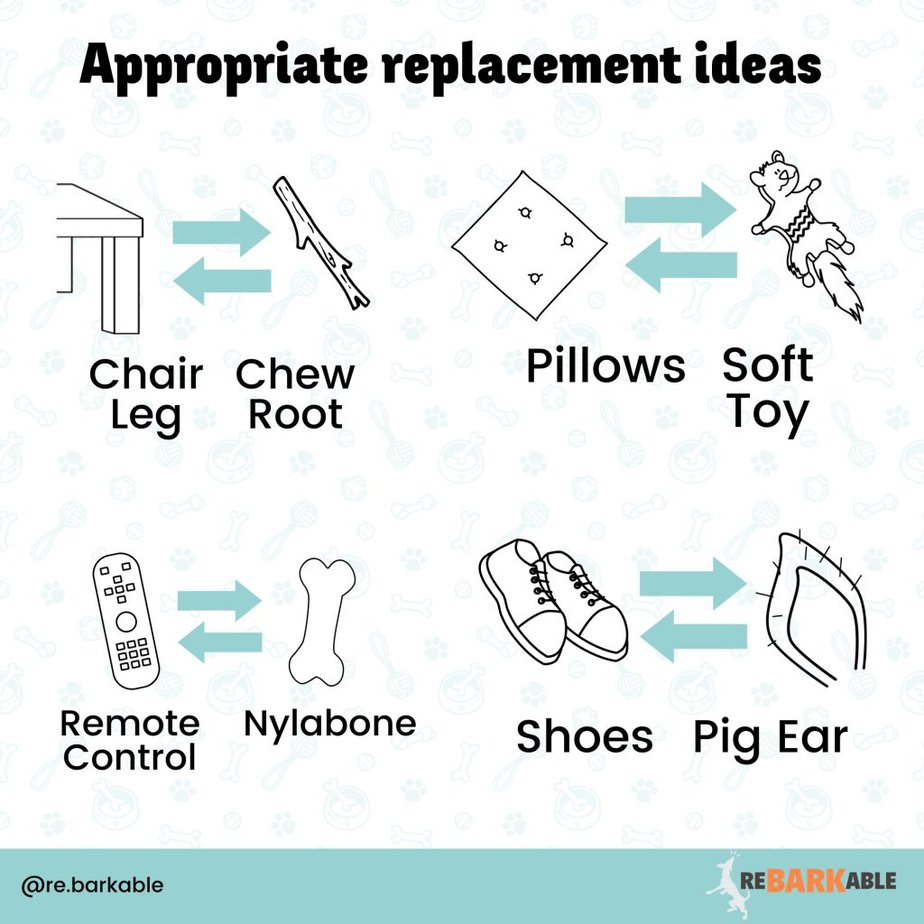
Step 2 – Redirect to the Right Chew Items
From there, supervision comes into play. Keeping close watch lets you step in the moment your puppy shows interest in something off-limits.
The most critical piece of this whole process is choosing the right item to redirect them toward.
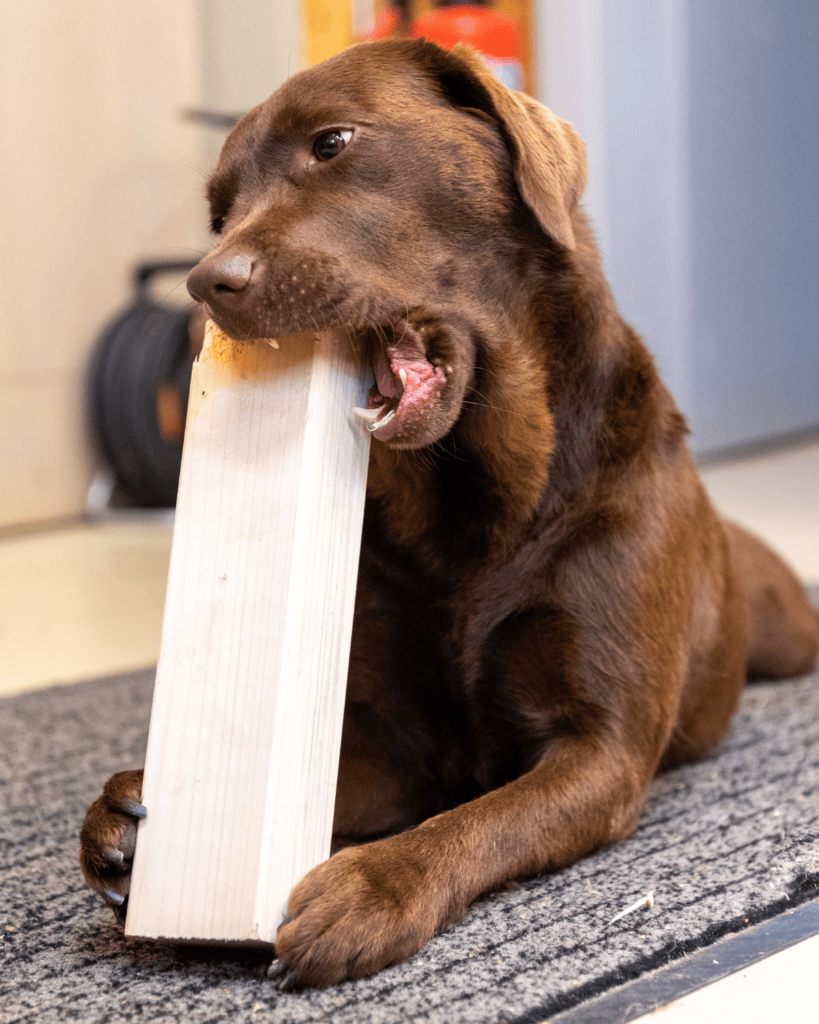
If your dog is gnawing on a wooden sideboard, for instance, handing them a nylon chew toy probably won’t cut it — but a wood-textured chew would likely do the trick. Choosing appropriate toys, ideally natural ones made from non-toxic materials, beats letting them default to electrical cords.
The goal is to match the texture of what they were drawn to as closely as possible. It’s a bit like craving chocolate cake — handing someone a cucumber instead isn’t going to satisfy that same craving.
This step lets your puppy keep doing the chewing they naturally want to do (which is inherently rewarding to them) while steering that behavior toward acceptable targets. That way, they’re learning through positive reinforcement rather than punishment.
Step 3 – Stay Consistent and Patient
From here, it’s about repetition. Keep doing it, over and over.
Patience isn’t easy to maintain, especially during the demanding puppy stage, but consistent redirection over time is genuinely the most important piece of this whole process. It has to happen gradually and consistently.
Step 4 – Expand Their Freedom Gradually
Over time, you’ll want to give your puppy more unsupervised freedom, which naturally means less direct monitoring while they continue learning.
As with building confidence for alone time or crate training, start small — periods where your puppy is likely to succeed, like while you’re cooking dinner or watching a show, where you’re nearby but not fully focused on them.
From there, you can gradually stretch it out further — stepping into another room, or running a quick errand. It’s all about incremental steps and controlling how much exposure they get at each stage.
Q – What Should I Do If My Puppy Starts Chewing Again?
Dial things back a step or two, supervise a bit more closely, and consider adding an intermediate stage to bridge whatever gap caused the setback. Some regression is completely normal and just part of raising a puppy.
Q – What About Teaching “Drop It” or “Leave It”?
The trouble with these commands is that they only kick in after your puppy has already started the unwanted behavior. In other words, your puppy has to make the mistake first before you can correct it — which runs counter to one of the fundamental principles of training (and honestly, of life in general): prevention beats correction every time. Relying on these cues also risks resource-guarding issues or your puppy swallowing something harmful before you can intervene. Preventing the situation in the first place is always the safer route.
Q – What if the Chewing Only Happens While I’m Out of the House?
This calls for a bit of investigation to figure out whether it’s an anxiety response tied to your absence — potentially separation anxiety — or simply a sign that your puppy has been given more freedom than they’re ready for.
If you’re ever uncertain, reach out to a professional trainer, a separation anxiety specialist, or a veterinary behaviorist. (Note: a veterinary behaviorist is different from your regular vet.)
A Gentle Approach Always Wins Out
Choosing a kind, positive method for training your puppy is the way to go. It builds trust and understanding between you and your dog, which is exactly what makes the training stick over the long run.
Rewards and praise show puppies which behaviors you want to see more of, making them eager to repeat the good ones. Chew deterrents, by comparison, offer new owners a tempting shortcut that just doesn’t hold up. That bitter-tasting spray isn’t necessary, no matter what the marketing claims — there’s really no such thing as an anti-chew spray that reliably works.
Positive reinforcement as an overall approach matters for a puppy’s mental and emotional wellbeing, helping them avoid unnecessary stress, discomfort, confusion, and fear. It guides them gently through growth, helping them become confident, well-mannered dogs without the fallout that harsher methods can cause. Put simply, staying positive doesn’t just make training more pleasant — it deepens the bond between you and your puppy too.