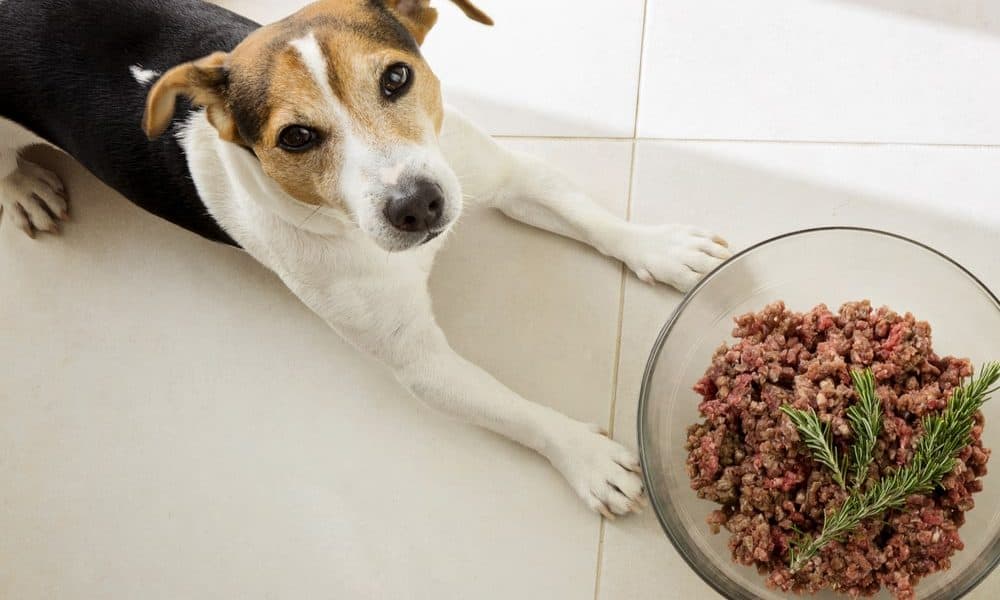
A shinier coat, better digestion, and fresher breath are just a few of the perks that come with putting your dog on a raw food diet.
That said, like most major changes, switching your dog over to raw feeding can get complicated, particularly if you’re moving away from dry, processed kibble.
There’s no single right way to introduce raw food that works for every dog. The right approach really comes down to things like your dog’s age, what they were eating before, how sensitive their stomach is, and other individual factors. Rather than switching all at once, it’s better to gradually blend raw food into your dog’s existing kibble. A slow transition from processed food to raw — typically spread across 7 to 14 days — tends to work best.
Below is a straightforward set of steps to help you move your dog onto raw food without major hiccups. Depending on how well your dog adapts, you might spend three to five days on each stage.
• Step 1: Start your dog on a mix of roughly 20 percent raw food to 80 percent kibble. Stick with this for three to five days while keeping an eye on their stool.
• Step 2: Once the stool looks mostly solid, move up to a 50/50 split between raw food and kibble. Maintain this for another three to five days, continuing to watch their stool closely. If diarrhea shows up, hold off on advancing until it clears up or you’ve spoken with your vet.
• Step 3: Once your dog seems ready, bump the ratio up to about 80 percent raw and 20 percent kibble for another three to five days.
• Step 4: If everything’s going smoothly, you can finish the transition by moving to a fully raw diet.
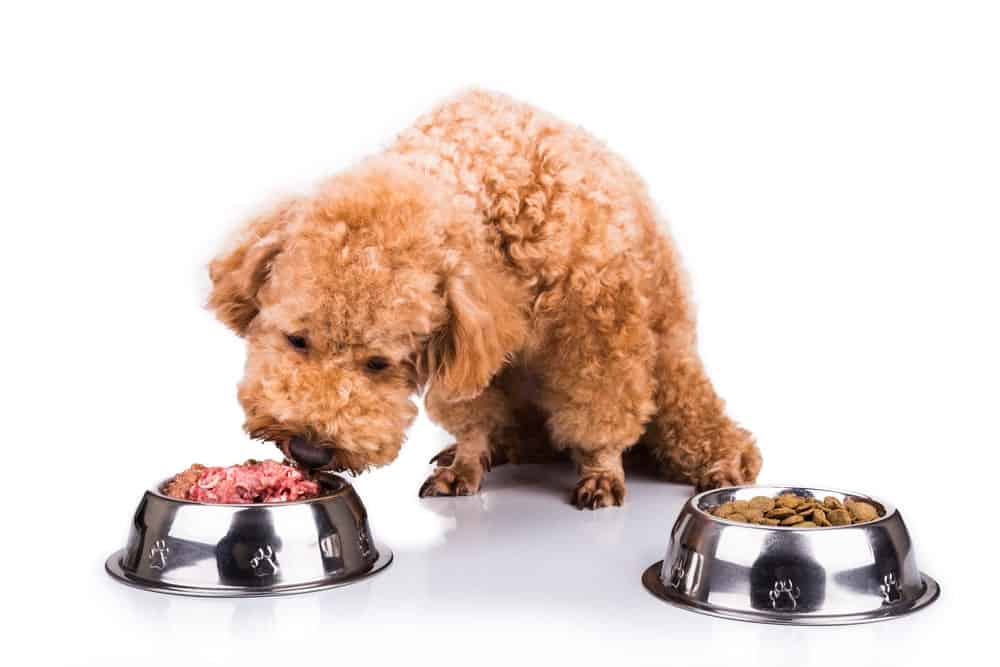
It’s completely normal for your dog’s stool to change in consistency as you work through these stages — though you should get in touch with your vet if diarrhea sticks around for more than a couple of days. Your dog might have a bit of an upset stomach or looser stools while adjusting, along with shifts in how often they need to go. By the time the switch is complete, your dog’s stool should be smaller and firmer, since raw food skips the fillers and unnecessary ingredients found in many processed diets.
4 Things Worth Keeping in Mind
Raw feeding is closer to what dogs are naturally built to eat, but it’s still easy to run into trouble during the switch if a few things aren’t handled carefully. Here are four tips to help make the transition to raw as painless as possible:
1. Stick to one protein source at first.
Even with a gradual approach, moving from dry kibble to raw food is still going to be a bit of an adjustment for your dog’s system. If your dog seems uneasy after starting raw food, they might become reluctant to eat. Keeping to a single protein — turkey or chicken, for example — gives their body more time to adjust. You can start introducing other proteins after a month or two once they’ve settled in.
2. Feed on an empty stomach.
For adult dogs, try feeding just once every 12 hours so they have time to work up an appetite and let their system reset. A hungry dog will be far more motivated to dig into their next raw meal. Keep in mind this approach is only appropriate for adult dogs — puppies under 12 months still need two to four meals a day.
3. Serve it at room temperature, on a plate.
Letting refrigerated raw food sit out for about 30 minutes before serving can make it more appealing to your dog.
It also helps to serve the food somewhere your dog can actually see it. Instead of a deep bowl, try plating the meal so your dog can clearly see what they’re getting.
4. Stay calm and consistent.
Your dog might refuse to eat as a way to get attention or extra treats. Try not to react to this, since showing concern can teach your dog that skipping meals gets results. Staying calm and holding firm sends the message that you’re serious, and most dogs will eventually decide eating the new food beats getting nothing at all. Keep in mind that every dog is different, so there’s no single formula that works for everyone — treat these steps as a starting point and adjust as your dog needs. Staying upbeat throughout the process will help your dog feel the same way. And the payoff — a dog who’s happier and healthier — makes the whole effort worthwhile.