Thinking about adopting a Catahoula Leopard Dog? These bold, one-of-a-kind dogs are recognized for their eye-catching coat patterns and their drive to work.
Interest in this breed among prospective owners has been climbing steadily. Still, before welcoming a Catahoula into your household, it’s important to get a handle on what they actually need and how they behave.
Let’s dig into whether this spirited, sharp-minded breed fits with the way you live.
What Sets Catahoula Leopard Dogs Apart?
A Distinctive Look
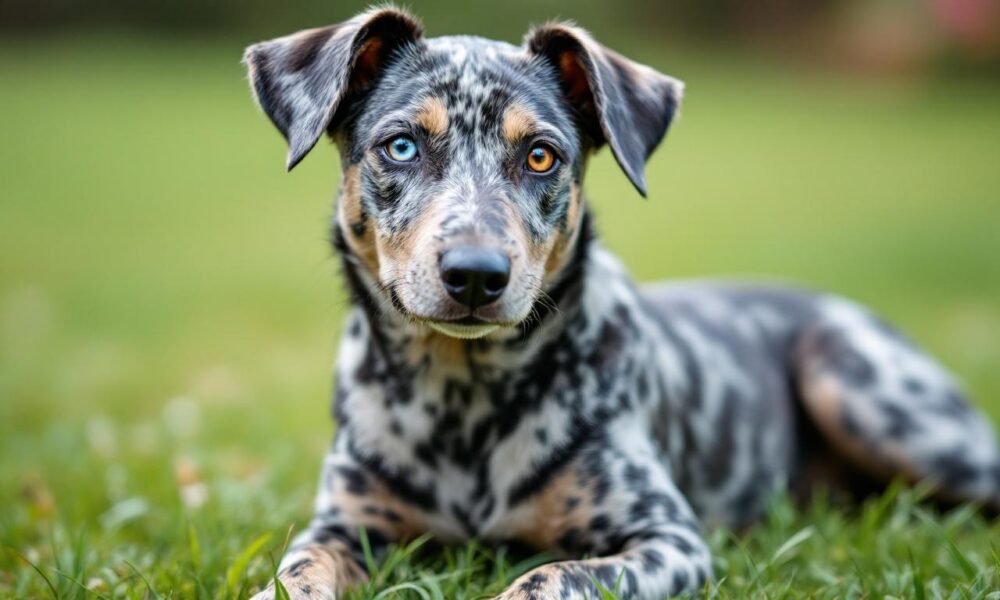
Catahoula Leopard Dogs are hard to miss. Their coats frequently show off a merle pattern, blending shades like blue, red, or brindle. These medium-to-large dogs generally weigh 50 to 95 pounds and reach 20 to 26 inches at the shoulder.
An Easy-Care Coat
Their short, sleek fur doesn’t demand much upkeep. Brushing once a week is generally enough to keep it looking its best, which makes this breed a good match for owners short on time for elaborate grooming routines.
A Bold, Independent Temperament
Catahoulas are intensely devoted to their families while staying cautious around unfamiliar people. That wariness makes them naturally solid watchdogs. At the same time, their independent streak can turn into stubbornness if training isn’t handled well. Getting them socialized early is key to raising a well-rounded Catahoula.
A Need for Serious Exercise
Plan on giving these dogs one to two hours of hard exercise every day. A leisurely stroll isn’t going to cut it — Catahoulas thrive on demanding activities like running, hiking, or agility work. Skimp on exercise and you’re likely to see destructive habits show up instead.
A Craving for Mental Challenges
Catahoulas are quick problem-solvers and pick up commands fast. Their sharp minds need constant engagement. Puzzle toys, regular training, and a mix of activities help keep boredom — and the behavior problems that come with it — at bay.
Training: Hard Work With a Payoff
Training a Catahoula takes patience and steady consistency. Their intelligence means they learn quickly, but their independent streak can make them push back against authority. Positive reinforcement gets the best results, since harsher methods tend to trigger resistance or aggression in this breed.
Roots as a Working Breed
According to the American Kennel Club, Catahoulas trace their origins to hunting and herding work in Louisiana. That background shows up today in their strong drive to work and stay busy. Owners who give them tasks that tap into these instincts tend to end up with calmer, better-behaved dogs.
What Kind of Home Works Best
Catahoulas can technically adjust to a range of living situations, but they don’t do well in apartments or with owners who prefer a quiet, low-activity lifestyle. Their energy and space needs make a home with a large, securely fenced yard a far better fit.
Looking at what makes Catahoula Leopard Dogs distinctive, it’s clear they need a particular kind of owner. With that in mind, let’s look at what makes them such rewarding companions.
What Makes Catahoula Leopard Dogs Such Great Companions
Fierce Loyalty and a Protective Streak
Catahoula Leopard Dogs build tight bonds with their families, and that closeness naturally comes with protective instincts. Plenty of owners say they feel safer just having their Catahoula nearby. That said, this protectiveness needs to be balanced with proper socialization. The American Kennel Club suggests introducing Catahoulas to a wide range of people and settings while they’re young, to prevent them from becoming overprotective.
Skilled at a Variety of Jobs
Thanks to their working-dog background, these dogs handle all kinds of tasks well. Farmers and ranchers frequently praise Catahoulas for their herding talent. A 2020 survey conducted by the Louisiana Farm Bureau found that 78% of Catahoula owners saw better livestock management after bringing these dogs into their operations.
Catahoulas also perform well in search-and-rescue work. Their sharp sense of smell and stamina make them genuinely useful in wilderness search efforts.
Low-Effort Grooming for Busy Households
Despite how striking they look, Catahoulas don’t need much grooming. A weekly brushing and the occasional bath will usually do the trick — a real plus for owners considering the breed. Puppies typically run around $600, and adult dogs are usually priced similarly.
Flexible Enough for Different Lifestyles
Catahoulas do best in active households, but they can adjust to other living situations with the right care. City dwellers who make sure their dog gets enough exercise and mental engagement often find their Catahoula settles into urban life just fine. Research from the University of Pennsylvania’s School of Veterinary Medicine found that Catahoulas living in cities showed satisfaction levels similar to those living in rural areas, as long as their exercise and engagement needs were met.
Sharp and Quick to Learn
Catahoulas are highly intelligent, which makes them easy to train. They pick up obedience work quickly and can master complicated commands. That intelligence, paired with their eagerness to please, helps them shine in dog sports and other activities. Owners who put time into training often describe a noticeably stronger bond with their dogs as a result.

Catahoula Leopard Dogs bring plenty to the table as companions, but it’s worth weighing the challenges of owning this distinctive breed too. Here’s a look at some of the difficulties you might run into.
Can a Catahoula Leopard Dog Be Too Much to Handle?
Catahoula Leopard Dogs come with real challenges that anyone considering one should think through carefully. They require considerable time, energy, and resources. Let’s look at some of the potential downsides of adopting one.
A Demanding Workout Schedule
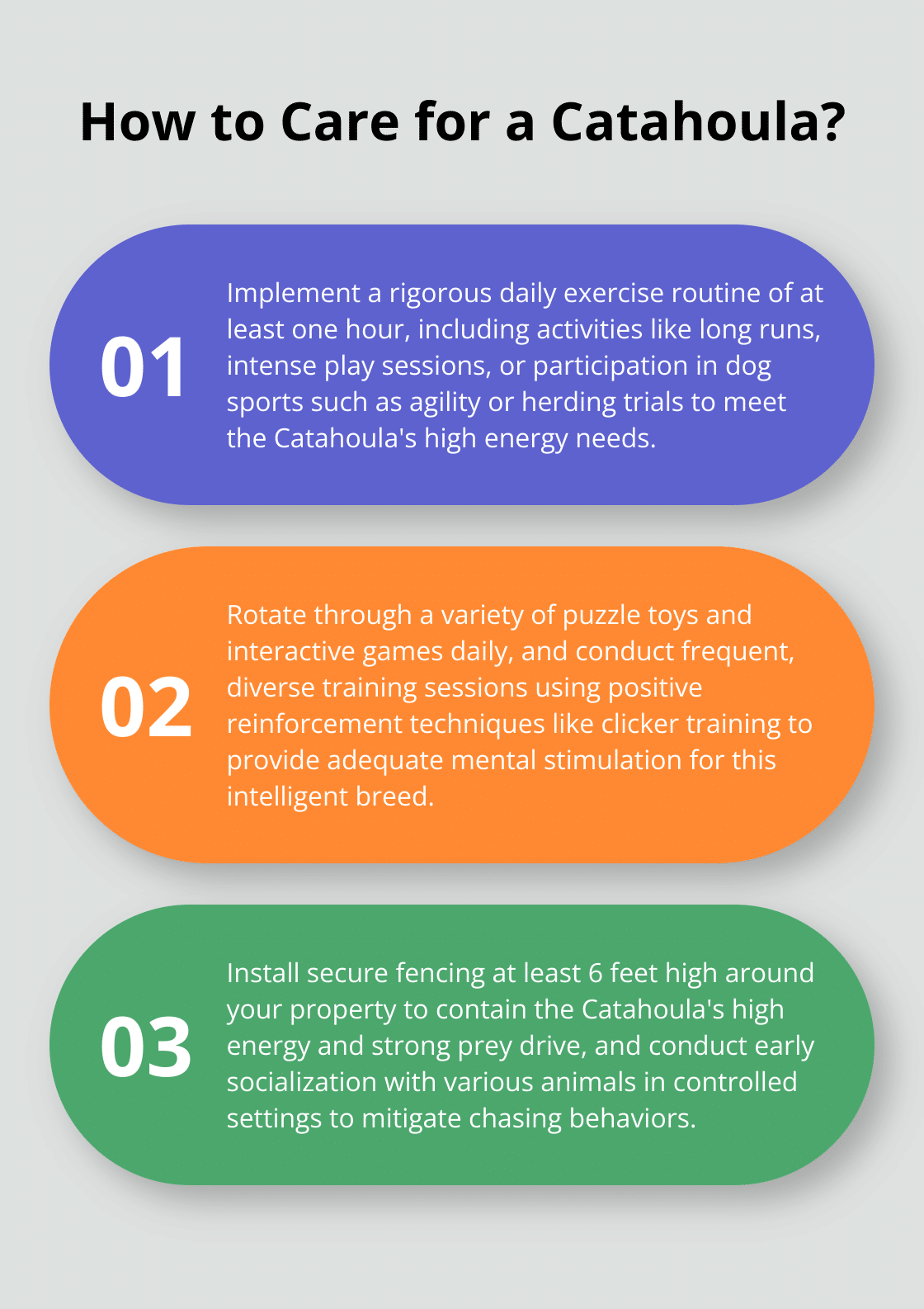
Catahoula Leopard Dogs aren’t a good match for apartment life, given how much energy they carry. They need at least an hour of intense exercise daily — think long runs, vigorous play, or activities like agility or herding trials.
Not getting enough exercise can lead to destructive behavior.
Keeping a Catahoula content and healthy means sticking to a reliable exercise routine — which might mean earlier mornings for a run or setting aside real time after work for play and training.
Keeping Their Minds Busy
Beyond physical activity, Catahoulas need a good deal of mental stimulation too. Their intelligence and knack for problem-solving mean they get bored fast with anything repetitive.
Owners tend to have the best luck rotating through different puzzle toys and interactive games. The Kong Company notes that Catahoulas are among the breeds that benefit most from their sturdy, treat-dispensing toys.
Training sessions should happen often and stay varied to hold these smart dogs’ attention. Many Catahoula owners find clicker training effective, since it allows for fast, clear communication and rewards.
A Strong Independent Streak
Catahoulas have an independent side that can come across as stubbornness during training. That trait served them well in their original working roles, but it can be tough for less experienced owners to manage.
Staying consistent matters most when training a Catahoula. The American Kennel Club advises starting training early and keeping a firm yet positive approach. Harsh corrections tend to backfire with this sensitive breed, sometimes triggering fear or aggression.
Reward-based training methods tend to work well for most Catahoula owners.
Managing a Strong Prey Drive
The pronounced prey drive built into Catahoulas can create complications, particularly in homes with other pets or in areas with local wildlife. That same instinct, once useful for hunting, can lead to chasing behavior that puts smaller animals at risk.
Early, thorough socialization matters a great deal here. Introducing your Catahoula to other animals in controlled settings can help temper their prey drive, though some individuals may never fully warm up to small pets or livestock.
Secure fencing isn’t optional for Catahoula owners. The American Fence Association recommends fencing at least 6 feet high to safely contain high-energy breeds like this one.
Health Issues to Watch For
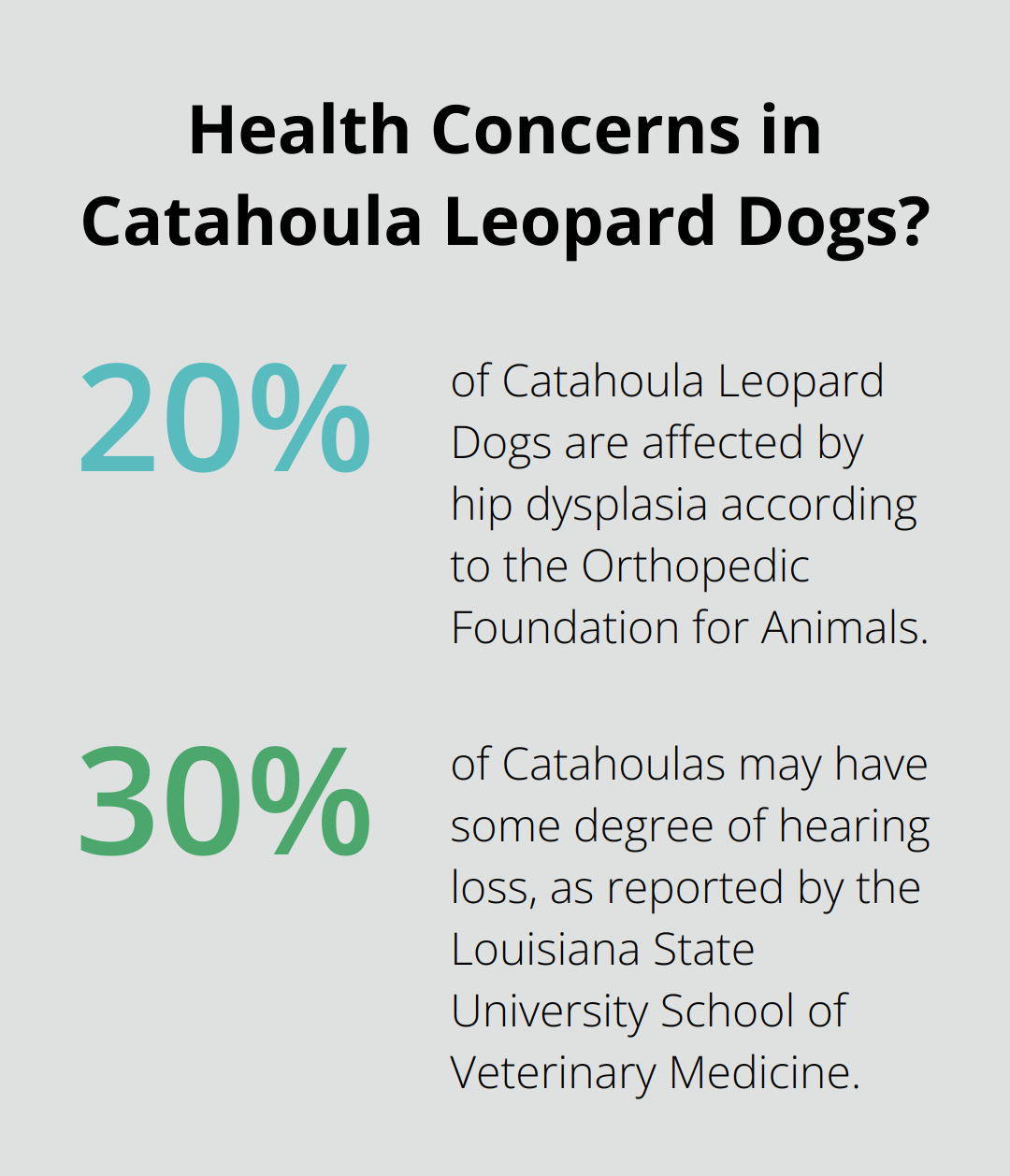
Catahoulas are generally healthy, but they are predisposed to a handful of genetic conditions. Hip dysplasia affects as many as 20% of the breed, according to the Orthopedic Foundation for Animals.
Routine vet visits make it possible to catch health issues early. The American Veterinary Medical Association recommends twice-a-year exams for adult dogs, with more frequent checkups for puppies and older dogs.
Deafness is another concern, especially in Catahoulas with mostly white coats. The Louisiana State University School of Veterinary Medicine reports that as many as 30% of Catahoulas may experience some degree of hearing loss.
Prospective owners should budget for possible medical costs. Pet insurance can help soften the financial impact, and many insurers offer breed-specific plans covering common Catahoula health concerns.
Final Thoughts
Catahoula Leopard Dogs bring a distinctive mix of traits and challenges to prospective owners. These striking dogs need plenty of exercise, mental engagement, and consistent training. Their high energy and independent streak won’t suit every household, but for the right owner, they offer unmatched loyalty and companionship.
Take the time to research thoroughly before deciding on a Catahoula Leopard Dog. Spend time with reputable breeders or rescue groups to meet Catahoulas in person and learn from owners who already have experience with the breed. That hands-on exposure will help you figure out whether a Catahoula truly fits your lifestyle and expectations.
Plenty of rescue groups focus specifically on this breed and can walk you through the adoption process with helpful guidance. Adopting a Catahoula calls for real dedication, patience, and understanding.