
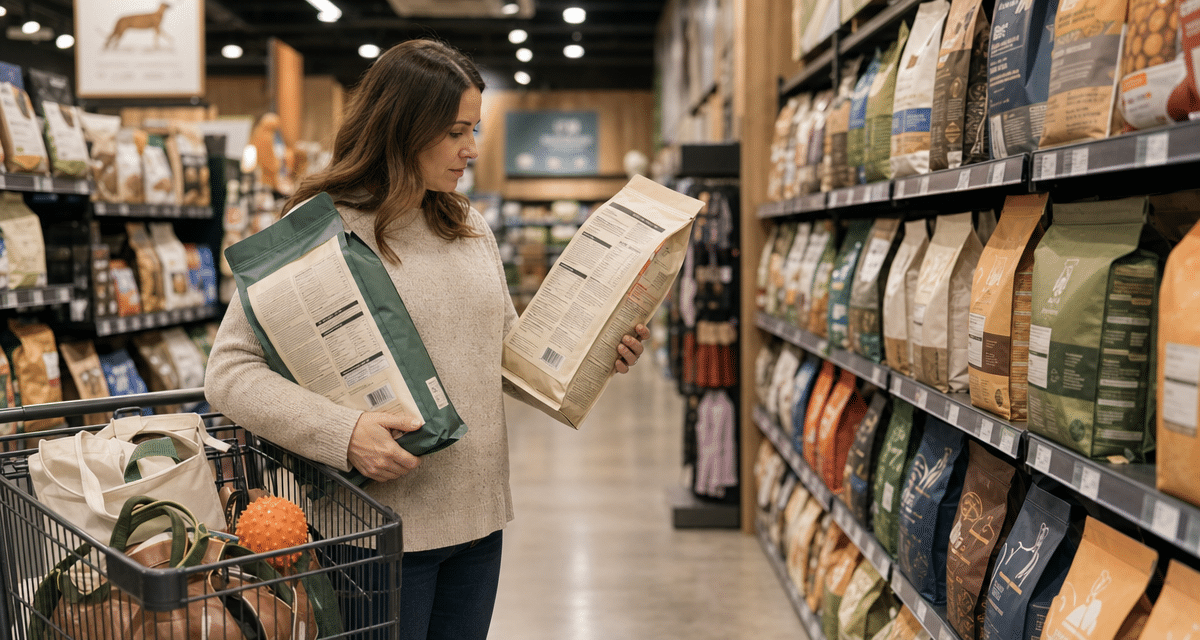
Picture yourself in the pet food aisle, holding two bags side by side. Both are plastered with reassuring phrases: “human-quality,” “restaurant-grade,” “natural,” “premium.” They all sound like they’re claiming the same thing.
They aren’t.
Out of every phrase you’ll find on a dog food label, “human-grade” is the only one with a strict, enforceable meaning set by the Association of American Feed Control Officials (AAFCO). Everything else is marketing language with zero regulatory backing. A bag can claim to be “human-quality” or “restaurant-grade” without ever meeting the sourcing or safety benchmarks those words seem to promise.
This isn’t a matter of shoppers being careless. Around 80% of dog owners feed kibble, and years of clever marketing have made these phrases genuinely difficult to tell apart. That’s not a comprehension failure on the consumer’s part — it’s a flaw in how labels are written.
By the time you finish reading, you’ll know which single term actually carries weight, be able to spot the imitators instantly, and be able to run a quick four-point test on any brand’s claim in under sixty seconds. Only a handful of companies genuinely satisfy the human-grade standard, and rather than asking you to simply trust that, this guide walks through exactly how to check it yourself.
“Human-Grade” Is the Only Term Here With a Definition That Can Actually Be Enforced
Put simply: for a dog food to earn the “human-grade” label, every ingredient in it must be suitable for people to eat, and the finished product has to be manufactured, packaged, and handled in a facility licensed for human food production under federal rules (21 CFR part 117).
It’s a two-part requirement. The ingredients alone aren’t enough — the facility has to qualify too. If either piece is missing, the product legally can’t use the term.
One misunderstanding worth clearing up: human-grade doesn’t mean the food was designed for people to eat, or that anyone is spooning it onto their own plate. It refers to the standard the ingredients and manufacturing process are held to — the same safety and handling rules that apply to food made for your own kitchen. It’s strictly a sourcing-and-manufacturing designation.
To appreciate why this distinction matters, consider the norm. The bulk of pet food relies on feed-grade ingredients — a legal category that allows materials not cleared for human consumption — and is produced in feed-grade plants. That’s completely ordinary and entirely legal. It’s simply how the pet food industry has operated for generations.
Human-grade, on the other hand, is a voluntary claim that comes with real accountability. Any brand using it must be able to back it up with documentation, and every facility touching the finished product must be registered as both an FDA food facility and an FDA feed facility. So when a label says “human-grade,” a regulator can trace the paperwork behind it. When a label says “human-quality,” there’s no paperwork to trace at all.
That gap — one enforceable term surrounded by a crowd of unenforceable ones — is exactly where the imitation phrases thrive.
“Human-Quality,” “Restaurant-Grade,” “Table-Grade”: Close Enough to Fool You, Backed by Nothing

The trick is straightforward. Since “human-grade” is legally restricted, marketers reach for phrases that sound nearly identical but fall outside the rules — borrowing the credibility of the real standard without ever having to meet it.
Here’s a rundown of the imitators, and what each one really tells you:
- “Human-quality.” This is the riskiest one, since it’s only a single word removed from the genuine term. It has no AAFCO definition whatsoever. Any company can slap it on packaging no matter how the food is sourced or manufactured.
- “Restaurant-grade” and “table-grade.” These conjure images of a kitchen and a dinner plate — and that’s their entire function. Under pet food regulations, they carry no weight.
- “Kitchen-fresh” and “chef-crafted.” These are mood-setting words, not standards. Neither has any formal definition, and neither reveals anything about ingredients or facilities.
- “Natural,” “premium,” “holistic,” “gourmet.” “Premium,” “holistic,” and “gourmet” have no regulatory definition at all. “Natural” is the odd one out — it does have an AAFCO definition, but it only addresses how ingredients are processed, not whether they’re edible for humans. A product can be labeled “natural” while still being entirely feed-grade.
- “Made in a USDA-inspected facility.” This one is the most deceptive, because it sounds like solid evidence. It isn’t. Virtually all meat passes through a USDA-inspected facility at some point along the supply chain. What actually matters is whether the finished pet food itself is made to human-food standards — not whether some building somewhere in the process was inspected at some point.
Here’s the full comparison at a glance:
Label term
Legally defined?
What it actually tells you
Human-grade
Yes (AAFCO)
Every ingredient is edible by humans AND the food is produced in a facility licensed for human food
Human-quality
No
Carries no enforceable meaning; it simply echoes “human-grade”
Restaurant-grade / table-grade
No
Evocative marketing phrasing with no standard attached
Kitchen-fresh / chef-crafted
No
Sets a mood rather than describing sourcing or facilities
Premium / holistic / gourmet
No
Holds no regulatory meaning
Natural
Yes (AAFCO)
Restricts processing methods and synthetic additives; says nothing about human-edibility or facility standards
“USDA-inspected facility”
Misleading
Nearly all meat passes through one; tells you nothing about the finished food
The quick test to remember: only “human-grade” demands both human-edible ingredients and a facility licensed for human food. If a phrase doesn’t guarantee both of those things, it’s just atmosphere, not a real standard.
Dog Food Labels Are Designed to Comfort You, Not Educate You

If you’ve ever grabbed a bag simply because it said “premium” or “restaurant-grade,” that doesn’t make you naive — it means you responded exactly the way the packaging was designed to make you respond.
The pet food aisle is one of the rare grocery categories where shoppers can’t taste-test or independently verify what they’re buying. You can’t sample the product yourself, and your dog can’t leave a written review. So trust ends up resting entirely on the wording printed on the bag — and that’s precisely the opening that copycat phrases are built to exploit.
There’s a second layer of confusion at play too: many owners assume that “regulated” automatically means “verified.” In practice, AAFCO establishes model definitions and labeling guidelines, but it doesn’t test, approve, or certify individual products. Actual enforcement falls to the FDA and state-level regulators. There’s no such thing as an “AAFCO-approved” seal, because AAFCO doesn’t approve products in the first place.
Combine those two realities and you get today’s pet food shelf: loosely governed phrases like “natural” and “premium” sitting right next to completely made-up terms like “human-quality,” all printed in the same confident typeface. Two bags that look equally credible can differ enormously in how they’re sourced and manufactured — and nothing on the front of the package tells you which is which.
The solution isn’t feeling bad about what you’ve bought in the past. Every owner reading this cares about doing right by their dog — that’s exactly why you’re here. The real fix is simply knowing the one legitimate term and how to verify it, which takes roughly a minute once you know the steps.
A Four-Step Check to Separate the Genuine Standard From the Imitators
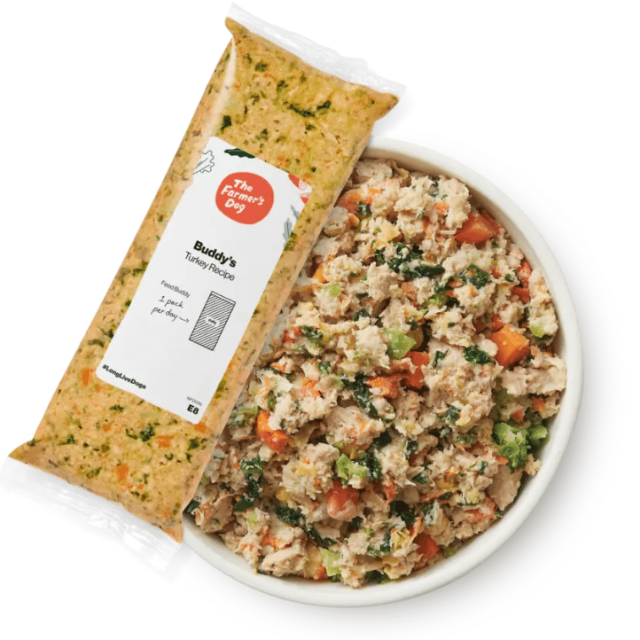
Apply this checklist to any brand claiming to be human-grade — or one using language that merely sounds like it. It works whether you’re looking at a website, a package, or a customer service chat window.
- Look for the precise phrase “human-grade,” attached to how the food is meant to be used. AAFCO requires the claim to appear as something like “human-grade dog food” — the term plus its intended purpose. Softer variations like “human-quality” or “made with human-grade ingredients” (notice: ingredients, not the finished product) don’t satisfy the requirement.
- Scan the ingredient list the way you’d read a grocery receipt. In a genuinely human-grade food, every ingredient should read like actual food. Rendered by-product terms such as “meal,” “by-product,” or “digest” are red flags pointing to a feed-grade product — categories that don’t exist in human food manufacturing.
- Find out where the finished product is actually made. A brand that’s truly human-grade can confirm its meals come from a facility licensed for human food production. “Our meat comes from USDA-inspected suppliers” is a different claim entirely — that describes the supply chain, not the finished product.
- Just ask the company. This is the quickest way to find out. Brands that genuinely meet the standard are eager to answer sourcing and facility questions, since it’s their strongest selling point. Vague, evasive, or deflecting responses are a warning sign.
That’s the entire skill set: four quick checks, done in under a minute, that no marketing team can talk its way around.
FAQ: Human-Grade and Other Dog Food Label Terms, Explained

What does “human-grade” dog food actually mean?
It means every ingredient is fit for people to eat, and the finished product is made and handled in a facility licensed for human food production, per AAFCO’s human-grade standard. It’s the only widely used pet food label term that comes with a strict, enforceable definition. It’s a sourcing-and-manufacturing standard — not a claim that the food was made for people to eat.
Is “human-quality” the same thing as “human-grade”?
No. “Human-quality” has no legal or AAFCO backing whatsoever. It differs from “human-grade” by a single word but carries none of its requirements. Any company can use it regardless of sourcing or manufacturing. Only “human-grade” demands both human-edible ingredients and a human-food-licensed facility.
Are “restaurant-grade” and “table-grade” actually regulated terms?
No. They’re purely marketing imagery with no regulatory standard behind them. They’re meant to evoke a kitchen and a dinner plate, but they promise nothing about ingredient quality or where the food was produced.
Do “natural” or “premium” mean the food is human-grade?
No. “Premium,” “holistic,” and “gourmet” carry no regulatory definition at all. “Natural” does have an AAFCO definition, but it only limits how ingredients are processed. A product can be labeled “natural” and still be feed-grade. None of these terms guarantee human-edible ingredients or a human-food facility.
Doesn’t “made in a USDA-inspected facility” prove a food is human-grade?
No. Nearly all meat passes through a USDA-inspected facility at some point, so the phrase reveals very little. What matters is whether the finished pet food is produced to human-food standards in a facility licensed for human food — not whether some building along the supply chain was inspected.
How do I verify a brand’s human-grade claim myself?
Run through four checks: (1) look for the exact phrase “human-grade” paired with its intended use; (2) confirm you recognize every ingredient as an actual food, with no “meal,” “by-product,” or “digest”; (3) verify the finished product is made in a facility licensed for human food; and (4) ask the company directly. A brand that genuinely qualifies will answer without hesitation.
Is human-grade food only worth it for “spoiling” your dog?
No. Meeting the human-grade standard isn’t about extravagance or spoiling your pet — it simply means the food is held to the same safety standards as food made for people. Fresh, human-grade diets have become increasingly accessible in recent years through brands offering pre-portioned, personalized meal plans delivered straight to your door.
Human-Grade Isn’t a Luxury — It’s Just Food You Can Trust
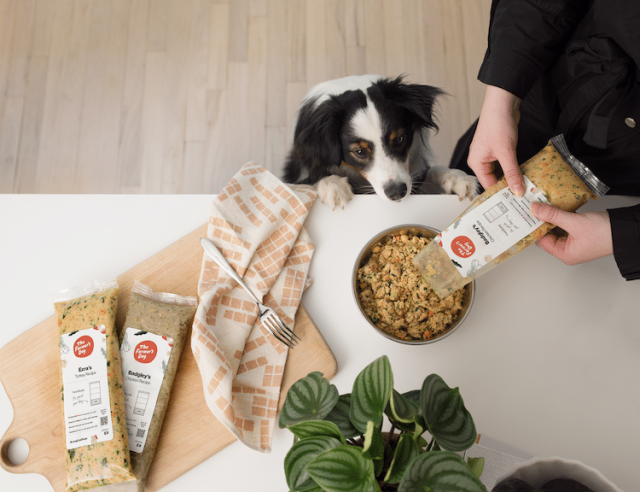
It’s worth stating plainly: meeting the human-grade standard has nothing to do with being boutique or indulgent. It rests on a simple, reasonable idea — that what lands in your dog’s bowl should meet the same safety standards as the food on your own counter.
For your dog, that standard translates into real, everyday advantages. Fresh, gently cooked food holds onto its natural nutrients and moisture, and is clinically shown to be highly digestible — meaning your dog absorbs more nutrition from it than from heavily processed alternatives (which can also mean smaller, more manageable stools). Human-grade ingredients and handling ensure that what’s in the bowl is genuinely safe to eat.
For you, that standard means no more decoding labels in the aisle. Rather than parsing marketing buzzwords, many human-grade brands now offer meals portioned specifically for your dog’s age, breed, weight, and activity level, delivered fully cooked and ready to serve. Pre-portioned meals also make weight management simpler, and keeping a dog at a healthy weight is a proven way to extend its life — lean dogs have been shown to live up to 2.5 years longer. (As with any health outcome, individual results vary.)

You don’t have to take a company’s word for the science behind it, either. Reputable human-grade brands typically have recipes developed by board-certified veterinary nutritionists to meet AAFCO’s complete-and-balanced standards, and it’s common for veterinarians — including staff nutritionists at these companies — to feed these diets to their own dogs.
Run any brand claiming human-grade status through the four-point checklist yourself: the exact wording, recognizable ingredients, a human-food-licensed facility, and straightforward answers to direct questions. A brand that genuinely earns the label will pass every one of those checks without hesitation.